Sushi Rice
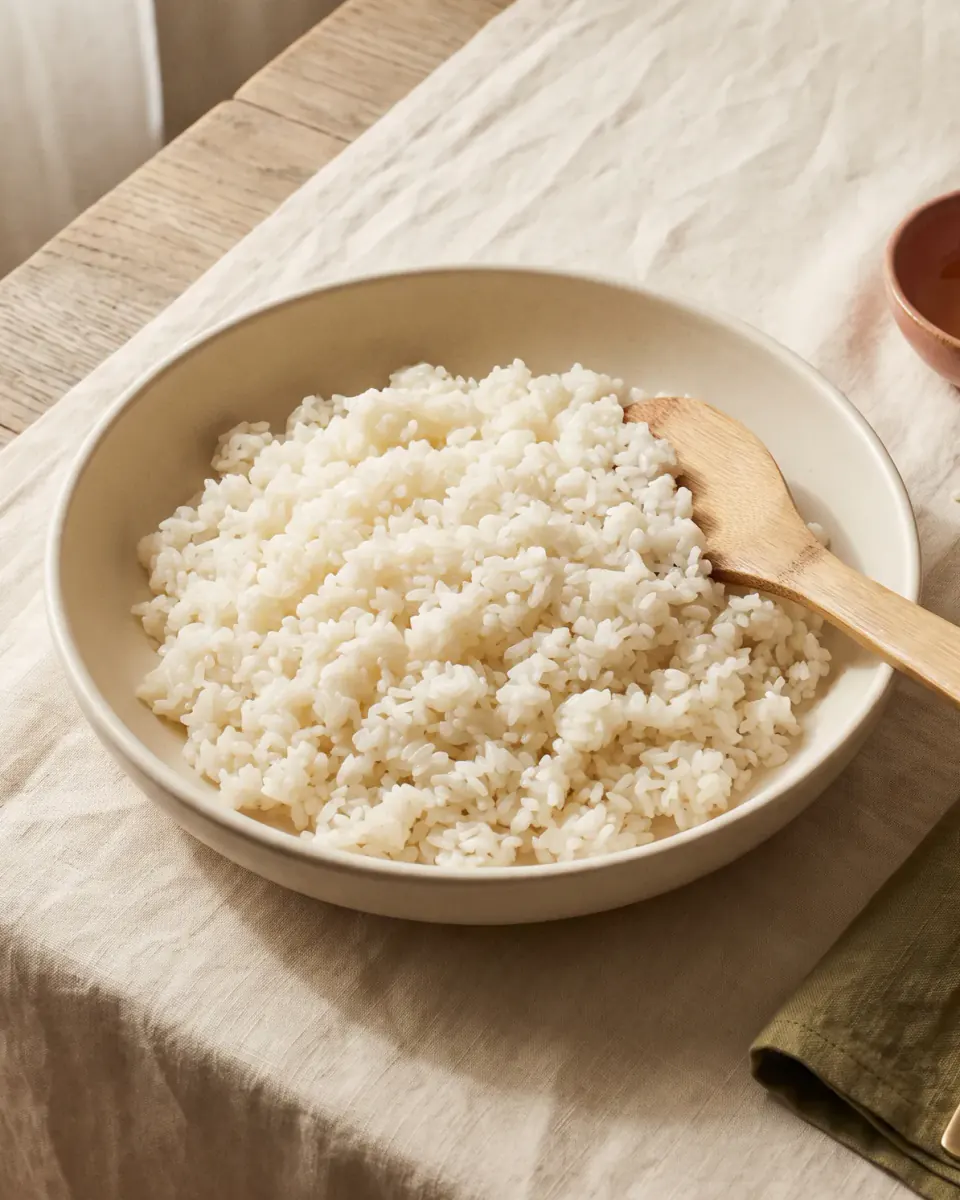
Sushi rice is ruined in two ways: under-rinsing it, and turning the heat down too late. An electric ring cools slowly, so on one it is especially easy to end up with a scorched bottom and a raw centre. Everything here is weighed rather than guessed: 400 g of rice, 460 ml of water, twelve minutes on the lowest setting and ten under a towel.
- Prep
- 15 min
- Cook
- 17 min
- Rest
- 40 min
- Total
- 1 h 12 min
- Servings
- 4
- Level
- Medium
- Per serving
- 400 kcal
Ingredients
Rice
Dressing (awasezu)
-
What to use instead
Cider vinegar at 5% works in place of rice vinegar and tastes a little more fruity. Do not reach for 9% spirit vinegar: it is harsher and needs diluting, which you cannot do by eye.
Makes: about 900 g of rice, 4 thick rolls
Shopping list
The ingredients for the servings you chose — copy them or send them to a messenger. Tick what you already have at home: only the rest goes on the list.
Method
-
Step 1: Rinse the rice
Put the rice in a bowl, cover it with cold water, swirl it with your fingers and pour the milky water away. Repeat 5–7 times, until the water runs almost clear. Do not rub the grains, they break. Drain in a sieve for 5 minutes.
-
Step 2: Soak for 30 minutes
Tip the rice into a heavy-bottomed pot, pour in the 460 ml of cold water and leave it for 30 minutes. The grain takes up water all the way to the middle and then cooks evenly, instead of going soft outside around a raw core.
-
Step 3: Bring it to the boil
Cover with a tight lid and set it over high heat. Leave the lid alone and go by sound and steam: as soon as steam comes out thickly and you hear a steady bubbling, move on.
-
Step 4: Twelve minutes on the lowest heat
Turn the heat right down — 1 or 2 out of 9 on an electric hob — and set a timer for 12 minutes. Do it the moment it boils: an electric ring cools slowly, and while it is coming down the bottom is already catching. Still no lifting the lid.
-
Step 5: Ten minutes under a towel
Switch the hob off and move the pot to a cold ring — a hot coil keeps radiating for a long while. Lift the lid quickly, lay a clean tea towel folded in two over the pot and press it down with the lid. The cloth takes up the condensation and the grains stay whole instead of wet.
-
Step 6: Warm the dressing
While the rice rests, put the vinegar, sugar and salt in a small saucepan and warm them, stirring, until every crystal has dissolved. Do not let it boil: boiling drives the aroma out of the vinegar and leaves only the acid.
-
Step 7: Pour it over
Turn the hot rice out into a wide non-metal container — glass, wood or plastic. Metal gives the vinegar a metallic edge. Pour the warm dressing evenly over the whole surface.
-
Step 8: Fold with the edge of the paddle
With a wooden or silicone paddle, cut into the rice edge-on and turn it over in layers, breaking up the clumps. Do not stir it round like porridge — that breaks the grains. Fan it at the same time with a fan or a piece of card: the gloss comes from cooling it fast. It is ready when the rice is warm, not hot.
Tips & variations
-
Tip
The usual reason for mush is rice that was not rinsed enough. If the water is still white after the fifth change, keep going — no amount of resting under a towel will fix it later.
-
Variation
This dressing sits at the gentler, sweeter end. The classic Japanese awasezu ratio is 4:2:1 vinegar, sugar and salt — three times as much salt. For the sharper, saltier taste of a sushi counter, keep the 75 ml of vinegar but use 38 g of sugar and 19 g of salt.
-
Swap
Cider vinegar at 5% works in place of rice vinegar and tastes a little more fruity. Do not reach for 9% spirit vinegar: it is harsher and needs diluting, which you cannot do by eye.
-
Storage
Sushi rice does not go in the fridge — cold sets the starch and the grains turn crumbly. Nor should it sit warm for long: cooked rice quickly becomes a place for bacteria to grow. Cover it with a damp cloth and use it within two hours.
-
Tip
Use a heavy-bottomed pot with a lid that has no steam hole. In a thin pot the bottom catches before the top is done, and a vent lets out exactly the water you measured 460 ml of.
Nutrition
| 1 serving | Whole dish 4 servings | |
|---|---|---|
| Energy | 400 kcal | 1,600 kcal |
| Protein | 7 g | 28 g |
| Fat | 1 g | 4 g |
| Carbohydrates | 91 g | 364 g |
Approximate values calculated from standard ingredient data.
Cooked it? Rate the recipe
No ratings yet — yours will be the first.