

Fruit Pastila
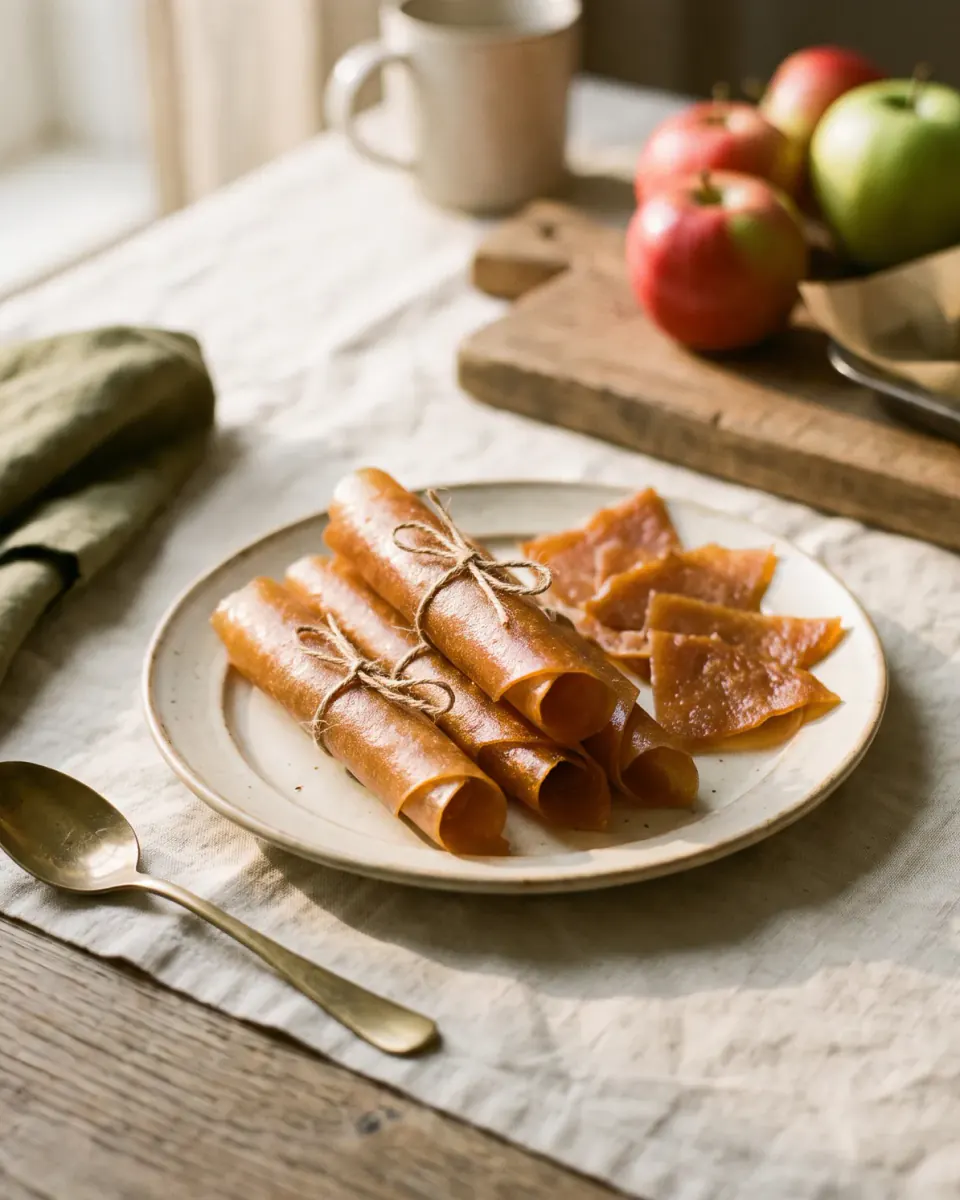
Pastila is apples with the water taken out. No sugar and no added pectin are needed: apples have plenty of both. The work comes down to two things — reduce the purée so the drying does not take forever, and spread it evenly, because thin patches scorch long before thick ones are done.
- Prep
- 30 min
- Cook
- 8 h
- Rest
- 1 h
- Total
- 9 h 30 min
- Servings
- 10
- Level
- Easy
- Per serving
- 90 kcal
Ingredients
Makes: about 300 g, 10 portions
Shopping list
The ingredients for the servings you chose — copy them or send them to a messenger. Tick what you already have at home: only the rest goes on the list.
Method
-
Step 1: Soften the apples
Quarter and core the apples, put them in a pan with the water and cook covered for 20 minutes until soft. Leave the skins on — that is where most of the pectin is.
-
Step 2: Pass through a sieve
Push the pulp through a sieve rather than blending it. The sieve holds back the skins and gives a smooth purée; a blender chops them in and the pastila comes out grainy.
-
Step 3: Reduce the purée
Simmer it for 20–30 minutes, stirring, until it has halved. The thicker the purée, the shorter the drying — and the less chance of it souring halfway through.
-
Step 4: Add honey and lemon
Stir in the lemon juice (which keeps the colour pale) and honey and cinnamon if you like. The reduced purée should taste pleasantly sharp — sweetness concentrates as it dries.
-
Step 5: Spread 4 mm thick
Spread it on a lined tray and level it with a spatula to an even 4 mm. Unevenness is the main reason some patches snap while others stay tacky.
-
Step 6: Dry at 70 °C
Dry for 6–8 hours at 70 °C with the oven door ajar, or in a dehydrator. It is ready when the surface no longer sticks to a finger and the sheet lifts off the paper.
-
Step 7: Lift and roll
Peel it off while still warm and roll it up or cut it into strips. Cold pastila cracks; warm pastila bends.
Tips & variations
-
Tip
Tart apples make the best pastila: more pectin, brighter flavour. Sweet varieties give a bland sheet, and honey does not fix that.
-
Tip
Above 80 °C it is no longer drying but baking: the edges scorch and turn bitter while the middle is still wet.
-
Variation
Apple and plum: half plums give a darker colour and a denser texture. Pear makes it sweeter but slower to dry, as pears hold more water.
-
Storage
Rolled, in paper bags or a glass jar, it keeps up to six months somewhere dry. If it softens, dry it again for an hour at 60 °C.
Nutrition
| 1 serving | Whole dish 10 servings | |
|---|---|---|
| Energy | 90 kcal | 900 kcal |
| Protein | 0 g | 0 g |
| Fat | 0 g | 0 g |
| Carbohydrates | 23 g | 230 g |
Approximate values calculated from standard ingredient data.
Cooked it? Rate the recipe
No ratings yet — yours will be the first.


