Inari Sushi
Inari is sushi turned inside out in the literal sense: instead of rice wrapping a filling, a pouch of fried tofu wraps the rice. The aburaage is simmered in sweet-salty broth until it has drunk all of it, and that is where the flavour children love in inari comes from.
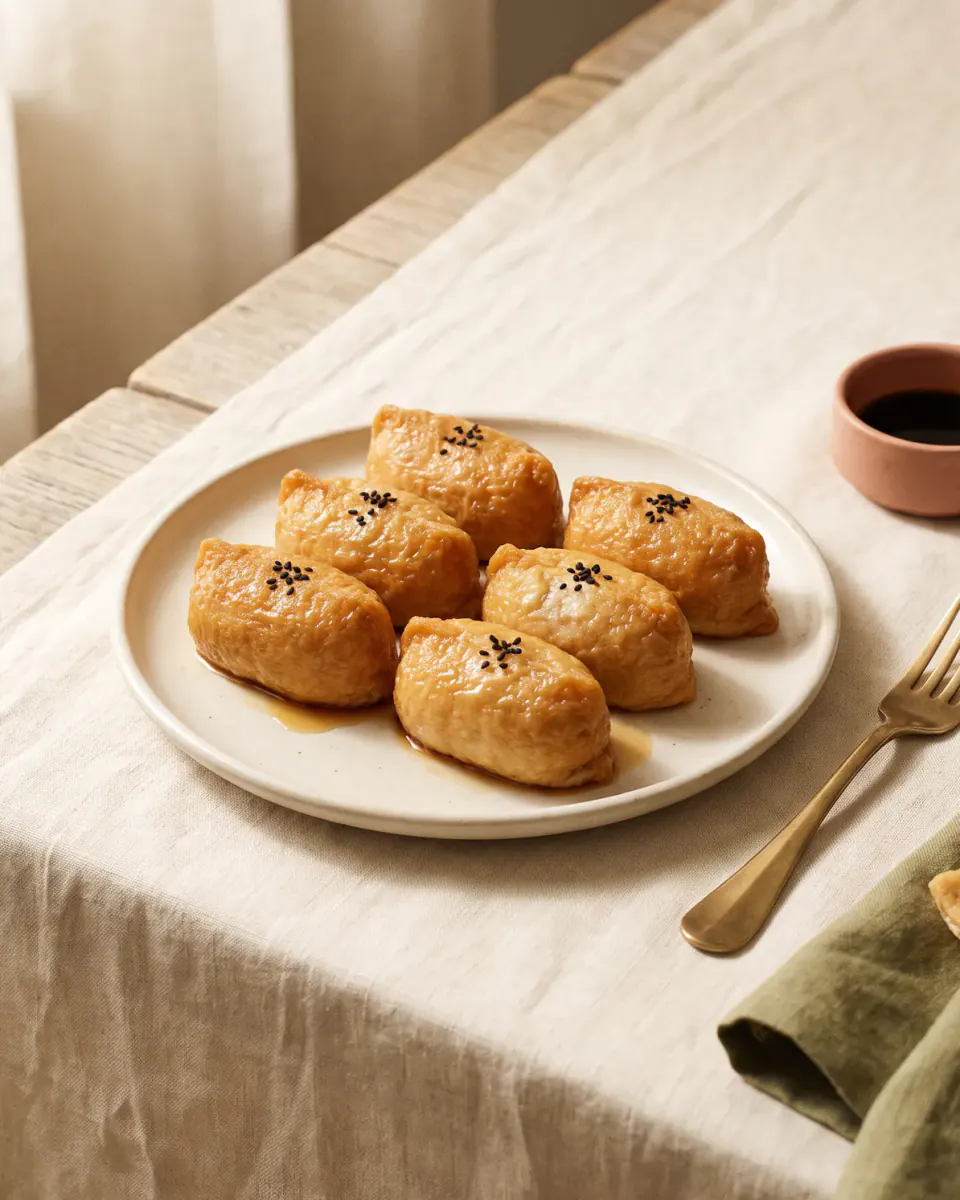
- Prep
- 20 min
- Cook
- 15 min
- Rest
- 10 min
- Total
- 45 min
- Servings
- 4
- Level
- Medium
- Per serving
- 330 kcal
Ingredients
The pouches
The filling
Makes: 12 pouches
Shopping list
The ingredients for the servings you chose — copy them or send them to a messenger. Tick what you already have at home: only the rest goes on the list.
Method
-
Step 1: Open the pouches
Roll a rolling pin over each sheet of aburaage from the centre outwards — that is what separates the layers inside. Cut it in half and ease the cut edge open with your fingers to make a pocket. A sheet that was not rolled tears at this step.
-
Step 2: Take the oil out
Drop the pouches into boiling water for a minute, then tip them into a colander and run cold water over them. Squeeze them gently between your palms. This washes out the oil the tofu was fried in; without it the broth will not go in.
-
Step 3: Simmer for 15 minutes
Bring the dashi, soy sauce, sugar and mirin to the boil in a wide pan and lay the pouches in a single layer. Cover them with a lid smaller than the pan, resting directly on them, and simmer gently for 15 minutes until only a film of liquid is left.
-
Step 4: Let them cool in the broth
Take the pan off the heat and leave the pouches in it for 10 minutes. It is while everything cools that the tofu takes up the flavour: hot, it gives liquid out; cold, it draws it in.
-
Step 5: Mix the rice with sesame
Fold the sesame into the warm rice with a paddle, using the same cutting strokes. Shape 12 ovals of 50 g each — a little smaller than a pouch, because the tofu has to close over them.
-
Step 6: Fill them
Press a pouch in your palm to squeeze out the surplus broth, open it with your fingers and settle a ball of rice inside, pushing it into the corners. Fill to three quarters: an overstuffed pouch splits along the seam.
-
Step 7: Fold the edge in
Tuck the edge of the tofu inside like an envelope and set the inari seam side down. That way they hold their shape and look tidy even in a lunchbox.
Tips & variations
-
Tip
The rolling pin in the first step is not a flourish. A sheet of aburaage sticks to itself as it fries, and without that pass it is next to impossible to open without tearing.
-
Variation
Finely chopped carrot, shiitake or pickled ginger often goes into the rice, making a five-colour inari. Use no more than two additions, or the flavour of the tofu disappears.
-
Swap
Ready-simmered pouches are sold in tins and packets, in which case the first four steps fall away. They taste sweeter than home-made, because commercial ones are usually oversugared.
-
Storage
Inari is the one sushi that survives a day: the pouch keeps the rice from drying. Keep them in a box at room temperature and do not put them in the fridge.
-
Tip
These are the most portable sushi there is: they do not fall apart, they do not leak and they are eaten with fingers. In Japan inari is what most often goes into a bento.
Nutrition
| 1 serving | Whole dish 4 servings | |
|---|---|---|
| Energy | 330 kcal | 1,320 kcal |
| Protein | 9 g | 36 g |
| Fat | 7 g | 28 g |
| Carbohydrates | 56 g | 224 g |
Approximate values calculated from standard ingredient data.
Cooked it? Rate the recipe
No ratings yet — yours will be the first.