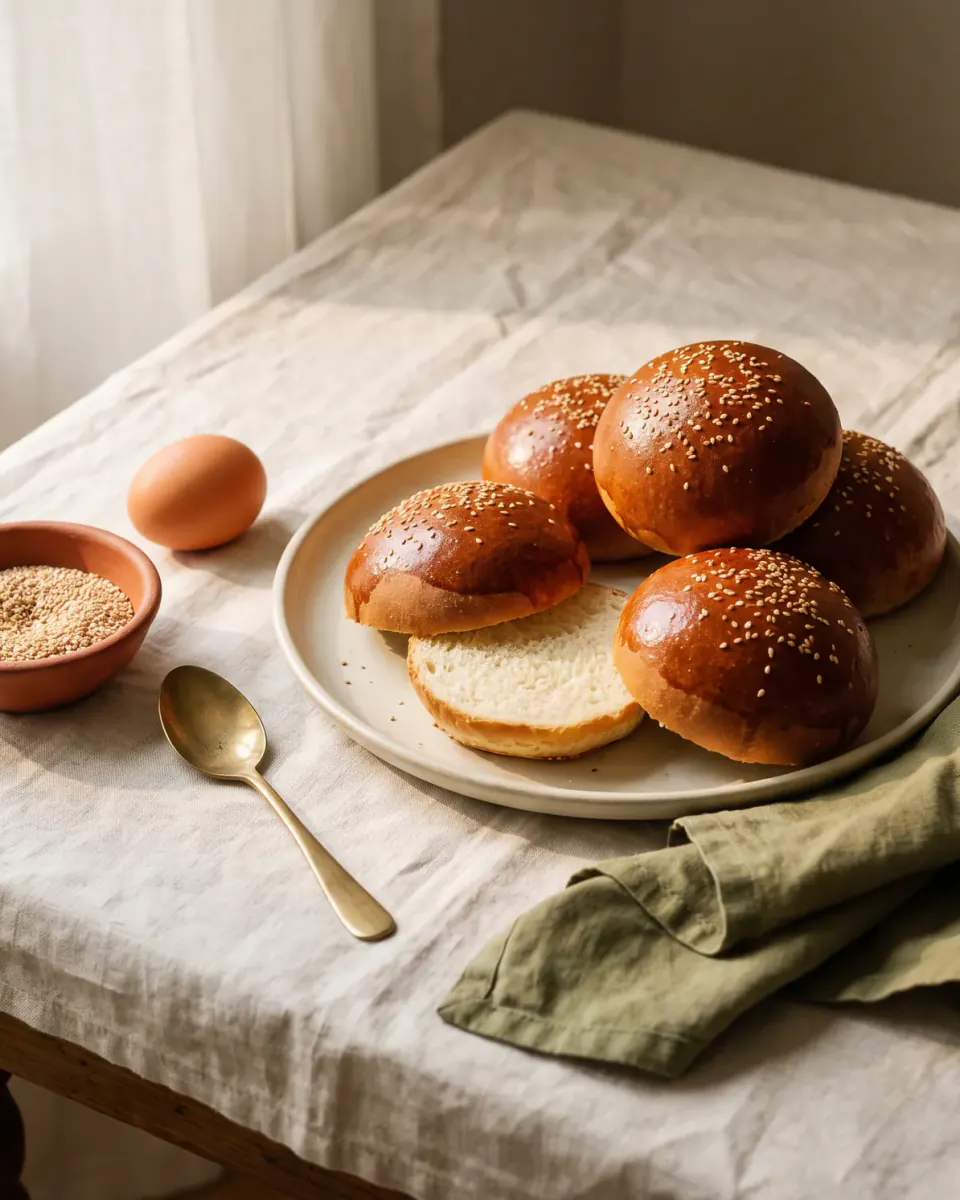
Croissants
A croissant is not a recipe, it is a temperature. Dough and butter have to be equally cold and equally pliable: butter that is too warm blends into the dough and gives you a bread roll, butter that is too cold cracks and tears the layers apart. Everything else is three folds, a night in the fridge and patience during the final proof.

- Prep
- 1 h 30 min
- Cook
- 18 min
- Rest
- 12 h
- Total
- 13 h 48 min
- Servings
- 12
- Level
- Challenging
- Per serving
- 370 kcal
Ingredients
The dough
For the butter block
For the glaze
Makes: 12 croissants
Shopping list
The ingredients for the servings you chose — copy them or send them to a messenger. Tick what you already have at home: only the rest goes on the list.
Method
-
Step 1: Mix the dough
Combine the flour, sugar, salt, yeast, the 40 g of soft butter, the milk and the water. Knead for 8–10 minutes until smooth — the dough should be firm, neither sticky nor elastic: overworked gluten fights the rolling pin later.
-
Step 2: Chill it overnight
Shape a 20×20 cm square about 2 cm thick, wrap it and refrigerate for 8–12 hours. The cold raises the dough slowly and brings it to the same temperature as the butter.
-
Step 3: Make the butter block
Put the 280 g of cold butter between two sheets of paper and beat it with a rolling pin into an even 18×18 cm square. It should bend without breaking: if it cracks, leave it out for 10 minutes.
-
Step 4: Lock the butter in
Roll the dough into a 26×26 cm square, set the butter on it as a diamond (turned 45°) and fold the four corners into the centre, pinching the seams. No part of the butter may show.
-
Step 5: First fold
Roll the slab into a 20×60 cm rectangle, always in the same direction, and fold it in three like a letter. Wrap and refrigerate for 30 minutes.
-
Step 6: Second and third folds
Repeat twice more, with 30 minutes of cold each time. Three letter folds give 27 layers of dough, which is all the honeycomb needs. If the butter starts to shine and soften at the cut edge, stop and chill immediately.
-
Step 7: Cut the triangles
Roll the dough into a 30×40 cm rectangle 4 mm thick, trim the edges and cut 12 triangles with a 10 cm base. Use a sharp knife: a squashed edge glues the layers together and the croissant will not open.
-
Step 8: Roll them up
Make a 1 cm nick in the middle of each base, stretch the triangle gently by its tip and roll from base to tip without pressing. The tip must end up underneath, or it lifts in the oven.
-
Step 9: Final proof
Set them on parchment, cover and leave for 2–2.5 hours at 24–26 °C. They are ready when they have grown by half and wobble visibly if you shake the tray. No warmer: at 28 °C the butter runs out before they ever reach the oven.
-
Step 10: Bake
Brush with the egg beaten with milk, avoiding the cut edges. Bake for 10 minutes at 200 °C, then lower to 180 °C and give them another 8–10 minutes, to a deep amber. Cool on a rack for 20 minutes.
Tips & variations
-
Tip
The usual reason for a pool of butter on the tray is a warm proof. A switched-off oven with a cup of warm water holds 25–26 °C; a radiator, or the oven light left on, gives 30 °C and more.
-
Tip
If at any point the dough starts springing back, put it in the fridge for 20 minutes. The gluten relaxes and the slab rolls out without force and without tearing.
-
Variation
The same dough makes pains au chocolat: instead of triangles cut 8×16 cm rectangles and roll two batons of dark chocolate into each.
-
Storage
Best within four hours. The next day, three minutes at 160 °C brings the crust back. Shaped but unproofed croissants freeze for a month — proofing them from frozen takes 3–4 hours.
Nutrition
| 1 serving | Whole dish 12 servings | |
|---|---|---|
| Energy | 370 kcal | 4,440 kcal |
| Protein | 6 g | 72 g |
| Fat | 23 g | 276 g |
| Carbohydrates | 34 g | 408 g |
Approximate values calculated from standard ingredient data.
Cooked it? Rate the recipe
No ratings yet — yours will be the first.