

Pain au Chocolat
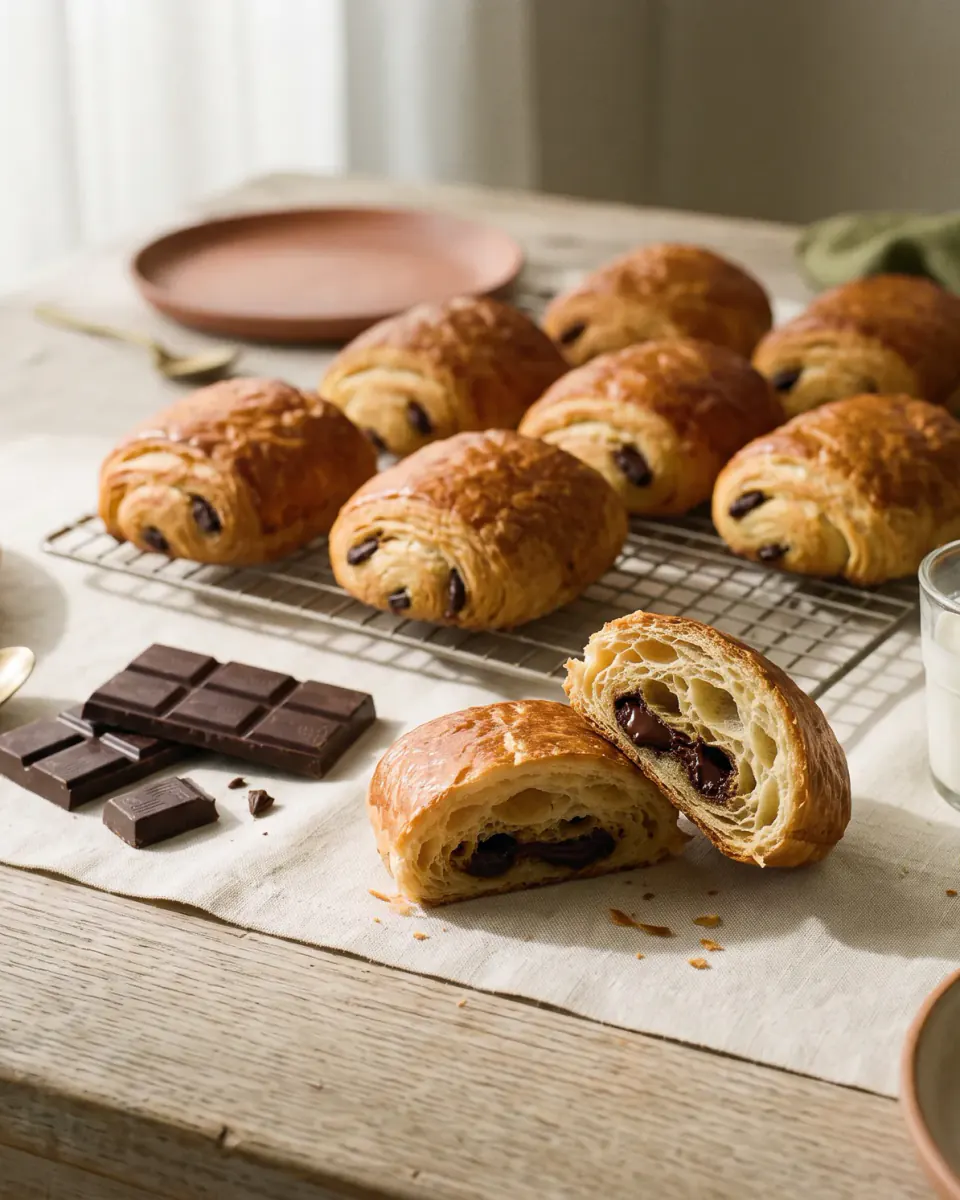
The dough is the same one the croissants are made from, written out in full here so you do not have to flick between pages. The difference starts at the knife: rectangles instead of triangles, two batons of chocolate in each and a seam that has to end up underneath. Use bar chocolate rather than chips — chips run out and bake onto the tray.
- Prep
- 1 h 20 min
- Cook
- 20 min
- Rest
- 12 h
- Total
- 13 h 40 min
- Servings
- 9
- Level
- Challenging
- Per serving
- 455 kcal
Ingredients
The dough
For the butter block
Filling and glaze
-
What to use instead
Chocolate at 70% balances the sweet dough; with milk chocolate the whole thing turns sugary — drop the sugar in the dough to 30 g if you use it.
Makes: 9 pastries
Shopping list
The ingredients for the servings you chose — copy them or send them to a messenger. Tick what you already have at home: only the rest goes on the list.
Method
-
Step 1: Mix the dough
Combine the flour, sugar, salt, yeast, the 30 g of soft butter, the milk and the water and knead for 8–10 minutes until smooth. Shape a rectangle 2 cm thick, wrap it and leave it in the fridge for 8–12 hours.
-
Step 2: Beat out the butter
Put the 220 g of cold butter between sheets of paper and beat it into a 16×16 cm square. It has to bend without breaking — that is the only state in which it rolls out together with the dough.
-
Step 3: Lock the butter in
Roll the dough into a 24×24 cm square, set the butter on it as a diamond and fold the corners into the centre, pinching the seams shut. No gaps: wherever butter escapes, a layer tears.
-
Step 4: Three letter folds
Roll into an 18×54 cm rectangle and fold in three. Repeat twice more, with 30 minutes in the fridge each time. If the dough starts resisting the pin, give it 20 minutes of cold more.
-
Step 5: Cut the rectangles
Roll the slab into a 24×48 cm rectangle 4 mm thick, trim the edges and cut nine 8×16 cm rectangles. Sharp knife, one stroke — a squashed edge glues the layers shut.
-
Step 6: Roll in the chocolate
Lay the first baton 1 cm from a short edge, roll it over once, add the second baton and roll to the end. The seam must finish underneath, or the pastry opens up in the oven.
-
Step 7: Final proof
Set them seam down on parchment, cover and leave for 2–2.5 hours at 24–26 °C. They are ready when they have grown by half and wobble when the tray is shaken; any warmer and the butter runs.
-
Step 8: Bake
Brush with the egg beaten with milk and bake for 10 minutes at 200 °C, then 8–10 minutes at 180 °C, to a deep gold. Cool for at least 20 minutes: hot chocolate is liquid and runs straight out of the cut.
Tips & variations
-
Tip
Cut the batons 1 cm wide from a bar — they hold their shape and stay as two clear ribbons. Chips and spreads melt, run onto the tray and bake to a bitter edge.
-
Tip
Keep the egg wash off the cut sides: where yolk bakes between the layers it glues them together and the pastry cannot open.
-
Swap
Chocolate at 70% balances the sweet dough; with milk chocolate the whole thing turns sugary — drop the sugar in the dough to 30 g if you use it.
-
Storage
The next day, 3–4 minutes at 160 °C makes the chocolate soft again. Rolled but unproofed pastries keep in the freezer for a month.
Nutrition
| 1 serving | Whole dish 9 servings | |
|---|---|---|
| Energy | 455 kcal | 4,095 kcal |
| Protein | 7 g | 63 g |
| Fat | 28 g | 252 g |
| Carbohydrates | 42 g | 378 g |
Approximate values calculated from standard ingredient data.
Cooked it? Rate the recipe
No ratings yet — yours will be the first.


