Ikura Gunkan
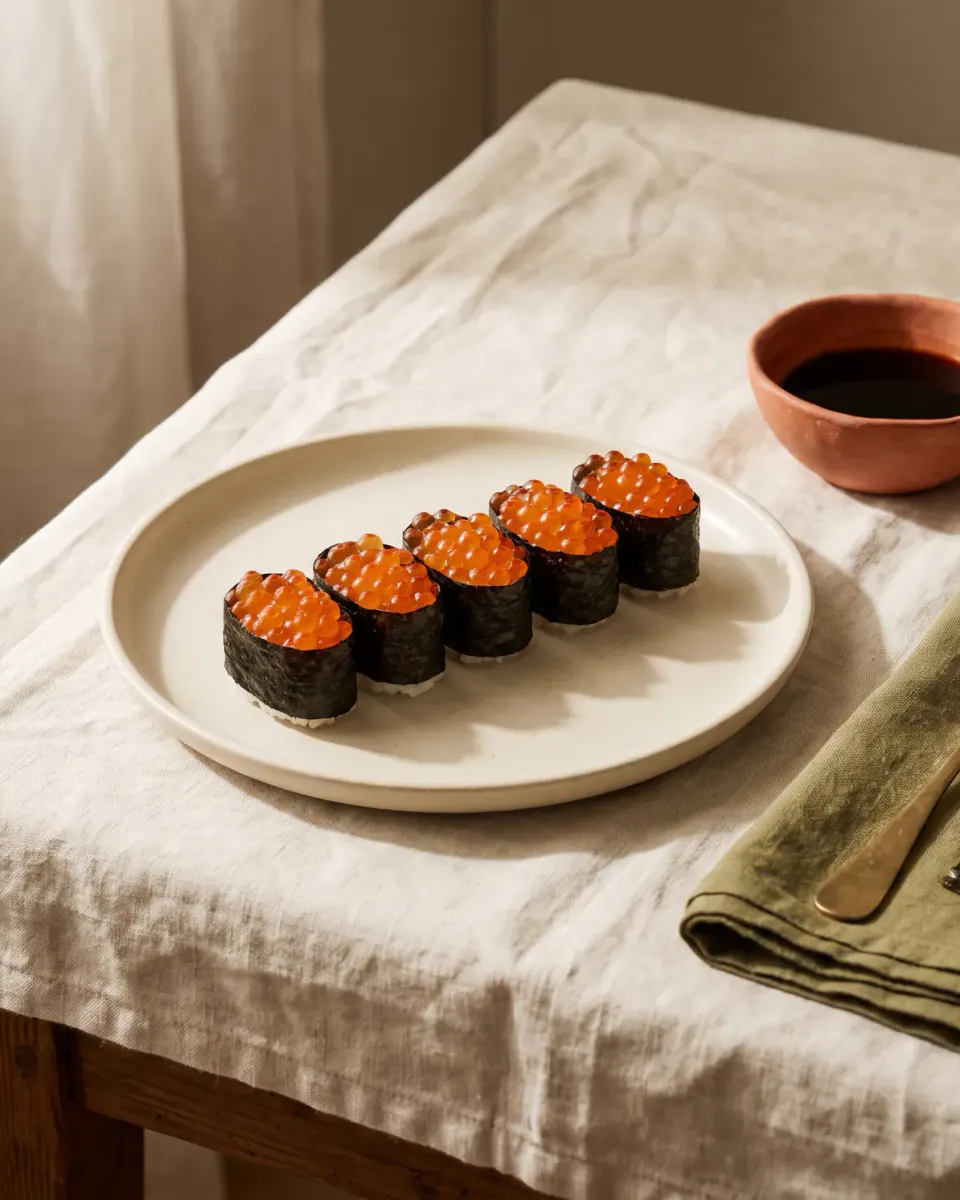
Gunkan was invented in Tokyo in the 1940s to solve one specific problem: roe and sea urchin cannot be laid on nigiri, they simply run off. So the rice was belted with a strip of nori standing proud of it like a gunwale — and the shape does look like a little ship, which is where the name comes from.
- Prep
- 20 min
- Total
- 20 min
- Servings
- 4
- Level
- Medium
- Per serving
- 180 kcal
Ingredients
-
What to use instead
Salmon roe costs more than masago, but the eggs are bigger and the wall fills faster. Either way 120 g is enough for 12 gunkan.
Makes: 12 gunkan
Shopping list
The ingredients for the servings you chose — copy them or send them to a messenger. Tick what you already have at home: only the rest goes on the list.
Method
-
Step 1: Cut the nori into strips
Cut each sheet of nori lengthways into six strips about 3 cm wide. Use dry scissors: moisture from your hands makes nori flexible, and it has to stay stiff enough to hold the wall up.
-
Step 2: Shape the rice
With a wet hand take 20 g of rice and press it into a firm oval about 2 cm tall. Press a little harder than for nigiri: this rice has to carry a wall and not slump under the weight of the roe.
-
Step 3: Belt it with nori
Wrap the oval in a strip of nori, shiny side out, so it stands 5–7 mm above the rice. That lip is what the roe sits in. Stick the end of the strip down with a couple of crushed grains of rice.
-
Step 4: Add the wasabi underneath
If you like heat, spread a thin film of wasabi directly on the rice inside the wall. On top it would mix into the roe and kill its flavour; underneath it only sharpens it.
-
Step 5: Fill with roe
Spoon the roe in with a teaspoon, filling the wall slightly proud. Do not press: the eggs should stay whole and glossy, and crushed ones turn a gunkan into a wet smear.
-
Step 6: Serve at once
Gunkan is eaten within minutes of being built. The nori takes up moisture from both the rice and the roe, and the wall that stood a minute ago simply subsides.
Tips & variations
-
Tip
Build them three or four at a time and serve them straight away rather than making all twelve first. These are the one sushi that loses its shape while you watch.
-
Variation
The wall holds any filling that will not sit still: a spicy salmon mixture, crab salad with mayonnaise, sweetcorn with mayonnaise, natto. In Japan a sweetcorn gunkan is a children's classic.
-
Swap
Salmon roe costs more than masago, but the eggs are bigger and the wall fills faster. Either way 120 g is enough for 12 gunkan.
-
Storage
Not kept at all. The roe can sit in the fridge and the rice under a cloth, but an assembled gunkan lives less than half an hour.
-
Tip
The strip of nori should be exactly 3 cm. Narrower will not hold the roe; wider curls inward under its own weight and gets in the way of the spoon.
Nutrition
| 1 serving | Whole dish 4 servings | |
|---|---|---|
| Energy | 180 kcal | 720 kcal |
| Protein | 9 g | 36 g |
| Fat | 4 g | 16 g |
| Carbohydrates | 26 g | 104 g |
Approximate values calculated from standard ingredient data.
Cooked it? Rate the recipe
No ratings yet — yours will be the first.