

Easter Paska Bread
Paska is a dough loaded with everything yeast dislikes — sugar, butter, egg yolks. It rises slowly and punishes impatience. So it starts with a sponge, the butter goes in only after the gluten has developed, and the dough gets exactly as much time as it asks for.
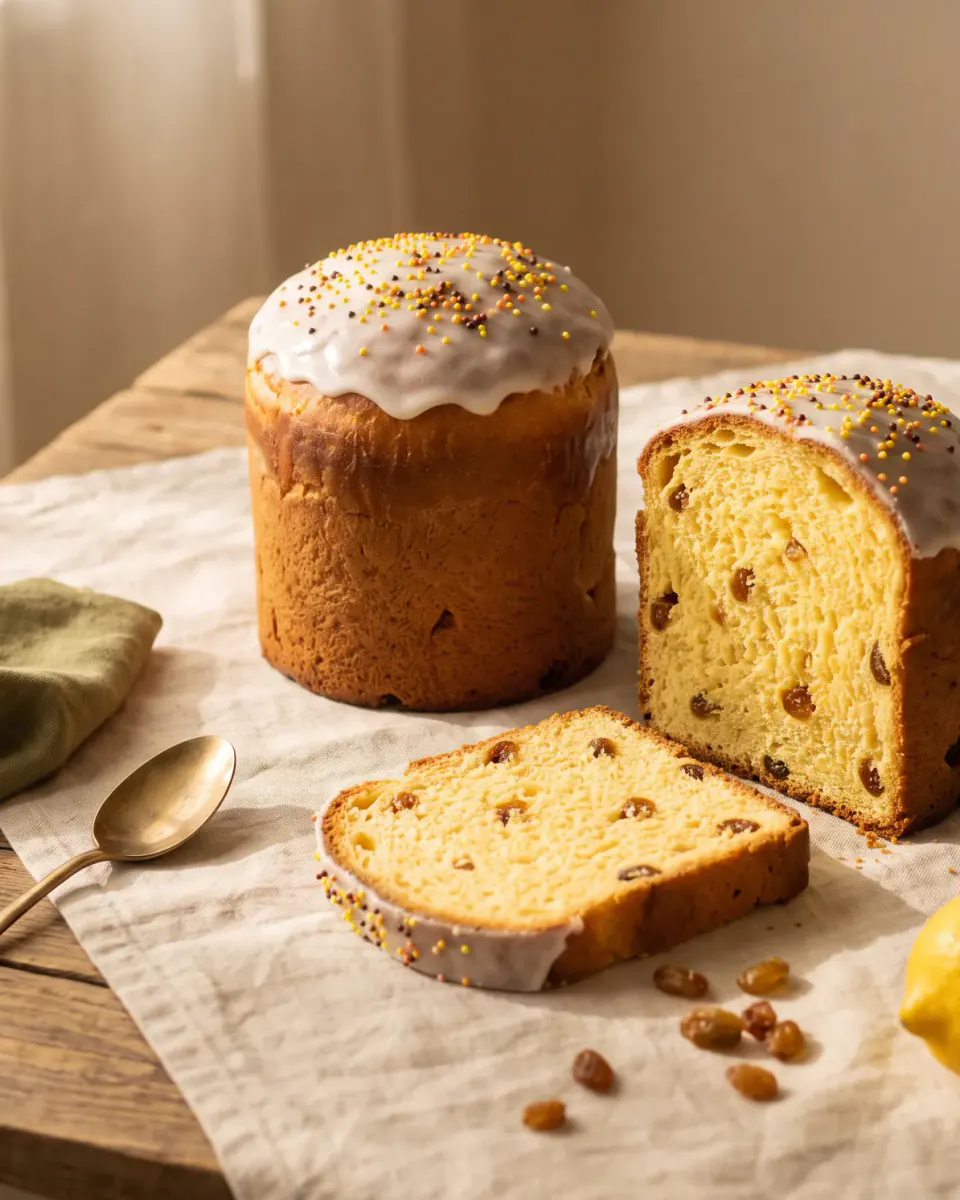
- Prep
- 1 h
- Cook
- 45 min
- Rest
- 5 h
- Total
- 6 h 45 min
- Servings
- 16
- Level
- Challenging
- Per serving
- 350 kcal
Ingredients
Sponge
-
What to use instead
Dried yeast instead of fresh: 8 g, stirred straight into the sponge flour, with the milk at the same warmth.
Dough
Icing
Makes: 2 loaves of 1 kg, 16 servings
Shopping list
The ingredients for the servings you chose — copy them or send them to a messenger. Tick what you already have at home: only the rest goes on the list.
Method
-
Step 1: Start the sponge
Rub the yeast with a spoon of sugar, pour over the warm milk (35 °C and no hotter — above 50 °C the yeast dies) and stir in 150 g of flour. Cover and leave somewhere warm for 40 minutes. It is ready when it has domed, is full of bubbles and has just begun to sink in the middle: the moment the yeast is strongest.
-
Step 2: Soak the raisins
Cover the raisins with the brandy and a spoon of boiling water for 15 minutes, then dry them well and toss them in a spoonful of flour. Dry raisins steal water from the crumb; wet ones sink to the bottom.
-
Step 3: Beat eggs with sugar
Whisk the eggs, yolks, sugar, salt and vanilla sugar for 5 minutes until pale and foamy. That trapped air works alongside the yeast and gives paska its shreddy texture.
-
Step 4: Mix the dough
Combine the sponge with the egg mixture, add the zest and the remaining flour. Knead for 10 minutes: the dough is still tacky but stretches and gathers into a ball.
-
Step 5: Add the butter gradually
Work in the soft butter piece by piece over another 10 minutes, until the dough pulls away from the bowl and turns silky. Butter comes last on purpose: fat added early coats the proteins and the gluten never develops.
-
Step 6: First rise
Cover and leave for 1.5–2 hours at 26–28 °C until doubled. Rich dough rises about twice as slowly as plain bread dough, so do not rush it.
-
Step 7: Fill the tins
Knead in the raisins, divide the dough and fill the tins exactly one third of the way up. Any more and the paska climbs over the rim.
-
Step 8: Final proof and the finger test
Leave for 45–60 minutes until the dough reaches two thirds of the tin. Press the side gently with a wet finger: the dimple should fill back slowly and not completely. Springing back at once means it is early; staying put while the dough sighs means it is over-proofed.
-
Step 9: Bake and shield the top
Bake in the lower third of the oven: 15 minutes at 180 °C, then down to 160 °C for another 30–35 minutes. As soon as the top browns, cap it with a hat of foil — the sugar and butter at the crown burn long before the centre is cooked. It is done when a thermometer in the middle reads 93 °C.
-
Step 10: Cool and ice
Turn the loaves out onto a towel and lay them on their side, rolling them a quarter turn every 10 minutes: a hot paska collapses under its own weight. Whisk the egg white with the icing sugar and lemon juice until glossy, spread it over the warm — not hot — loaves and add the sprinkles at once.
Tips & variations
-
Tip
Everything must be at room temperature. Fridge-cold eggs or butter stall the yeast hard, and the dough may never lift at all.
-
Swap
Dried yeast instead of fresh: 8 g, stirred straight into the sponge flour, with the milk at the same warmth.
-
Tip
Paper moulds need no greasing. Metal tins should be lined with paper and buttered — rich dough sticks harder than any other.
-
Variation
Instead of raisins use dried cranberries with candied orange, or chopped apricots with almonds. Keep the total weight of fruit the same.
-
Storage
Four or five days in a paper bag or under a cloth. The butter and sugar keep it soft; sealed in plastic it goes damp within a day.
Nutrition
| 1 serving | Whole dish 16 servings | |
|---|---|---|
| Energy | 350 kcal | 5,600 kcal |
| Protein | 8 g | 128 g |
| Fat | 12 g | 192 g |
| Carbohydrates | 52 g | 832 g |
Approximate values calculated from standard ingredient data.
Cooked it? Rate the recipe
No ratings yet — yours will be the first.


