Sourdough Starter
A starter is a colony of wild yeast and lactic bacteria living in a jar on a feeding schedule. The bubbles you see on day two come from different bacteria altogether, and on day three everything goes quiet — a normal stage, not a failure. The real culture arrives around day six, when the smell turns yogurty rather than sharp.
- Prep
- 20 min
- Rest
- 168 h
- Total
- 168 h 20 min
- Servings
- 1
- Level
- Medium
- Per serving
- 520 kcal
Ingredients
-
What to use instead
Rye gets going more reliably than white flour because there are more wild yeasts on the bran. With no rye to hand, use wholemeal wheat.
Makes: 1 jar of starter, about 300 g
Shopping list
The ingredients for the servings you chose — copy them or send them to a messenger. Tick what you already have at home: only the rest goes on the list.
Method
-
Step 1: Day 1: the start
In a clean jar mix 50 g of rye flour with 50 ml of water at 30 °C to the consistency of thick sour cream. Cover loosely — it has to breathe — and keep it at 24–26 °C.
-
Step 2: Day 2: first feed
Add another 50 g of rye flour and 50 ml of water without discarding anything. It may bubble dramatically: that is bacteria from the surface of the grain, not yeast.
-
Step 3: Day 3: the slump
The bubbles stop and the smell goes flat or cheesy. This is the point where most starters get thrown away, and it is exactly the point to keep feeding. Keep 50 g, add 50 g of flour and 50 ml of water.
-
Step 4: Days 4–5: every 12 hours
Twice a day, keep 50 g of starter and feed it 50 g of flour and 50 ml of water. From here you can switch to white flour or run a half-and-half mix; rye ferments faster.
-
Step 5: Day 6: signs of life
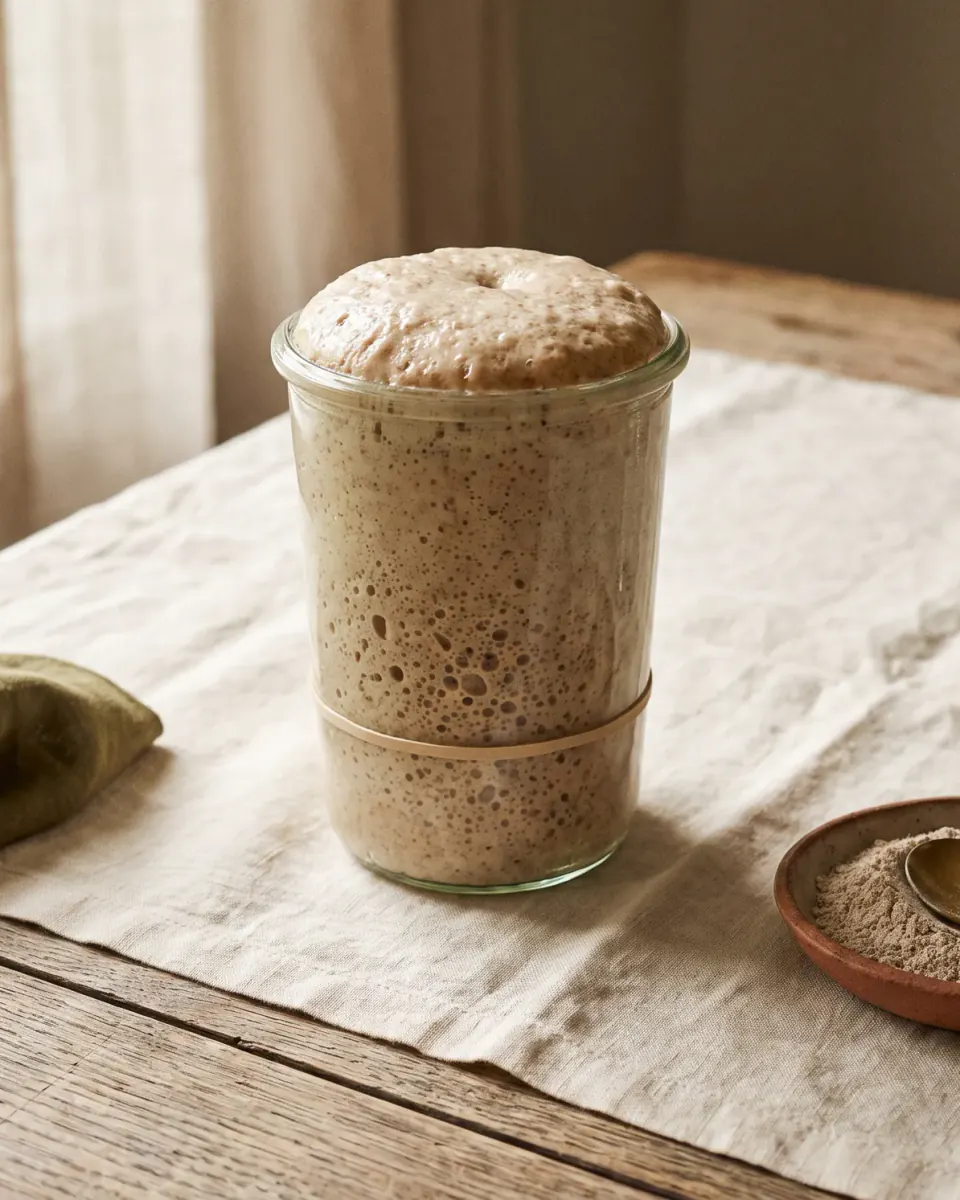
The starter should rise by half to double in 5–6 hours, be riddled with holes and smell of yogurt and apples.
-
Step 6: Day 7: the float test
Feed it, wait for the peak and drop a teaspoon into a glass of water: an active starter floats. If it sinks, feed for another 2–3 days — a matter of time, not of error.
-
Step 7: Keeping it going
At room temperature, feed twice a day. In the fridge, once a week: keep 50 g, feed 50 g of flour and 50 ml of water, leave it an hour in the warm and put it back.
-
Step 8: Before you bake
Take it out 12 hours ahead, feed it twice and use it at its peak — when it has stopped rising but has not begun to fall.
Tips & variations
-
Tip
Seven days is the honest number, and it depends on warmth. At 20 °C a starter takes 10–12 days; at 26 °C it fits inside a week.
-
Swap
Rye gets going more reliably than white flour because there are more wild yeasts on the bran. With no rye to hand, use wholemeal wheat.
-
Tip
Chlorinated tap water suppresses the bacteria. Leave it standing for a few hours or use filtered water.
-
Storage
A grey liquid on top just means hunger: pour it off and feed. Pink or orange patches, fuzz, or a smell of acetone mean the whole jar goes and you start again.
Nutrition
| 1 serving | Whole dish 1 serving | |
|---|---|---|
| Energy | 520 kcal | 520 kcal |
| Protein | 15 g | 15 g |
| Fat | 2 g | 2 g |
| Carbohydrates | 108 g | 108 g |
Approximate values calculated from standard ingredient data.
Cooked it? Rate the recipe
No ratings yet — yours will be the first.