French Omelette
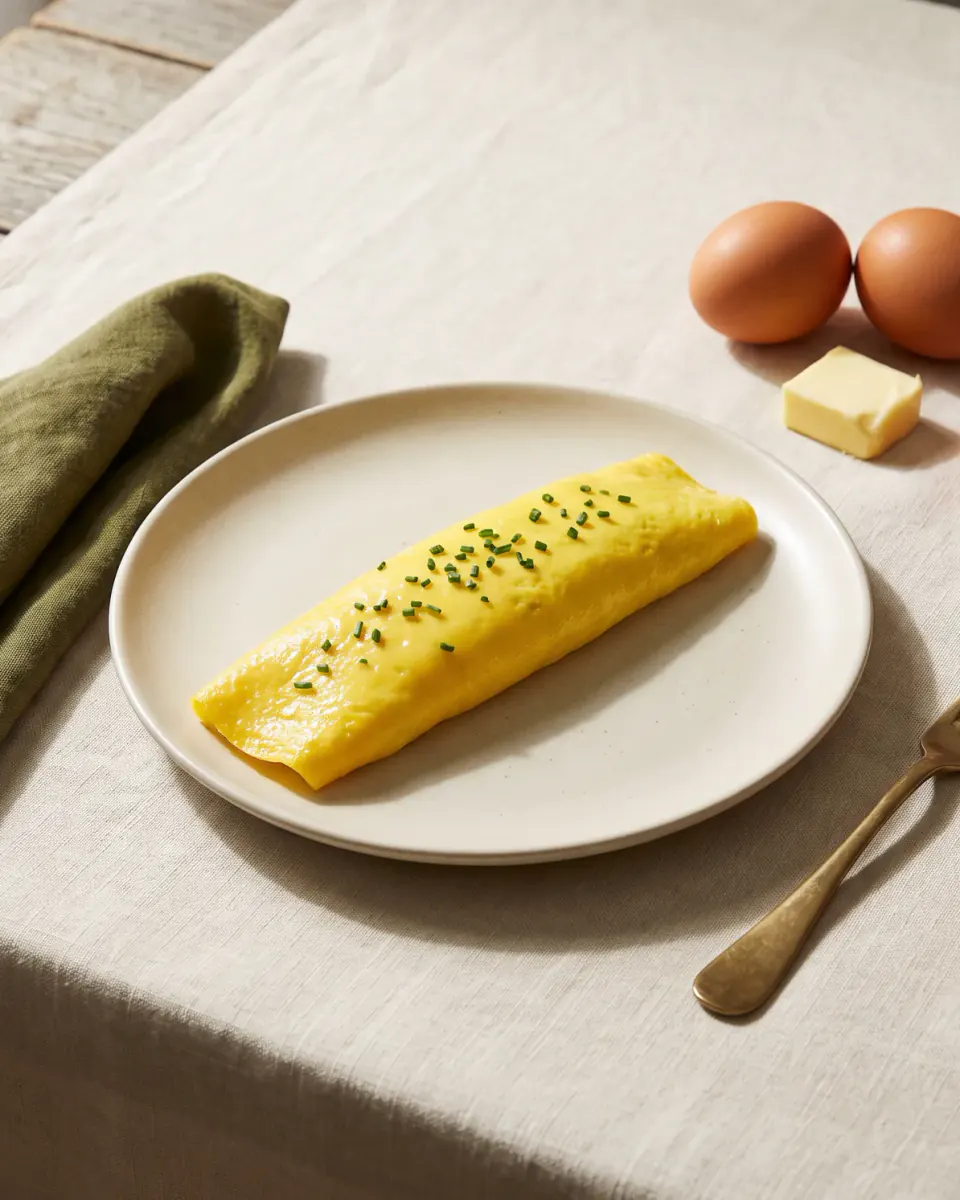
A French omelette is not the thick milk-and-eggs omelette of a home breakfast: there is no milk, no browning and no puff. It is three eggs, butter and technique. The heat is the whole game — low enough that the butter foams without colouring, and the fork never stops moving.
- Prep
- 5 min
- Cook
- 4 min
- Total
- 9 min
- Servings
- 1
- Level
- Medium
- Per serving
- 340 kcal
Ingredients
-
What to use instead
Use 10 g of butter plus a teaspoon of olive oil; the oil raises the temperature at which the butter browns.
Makes: 1 omelette, serves 1
Shopping list
The ingredients for the servings you chose — copy them or send them to a messenger. Tick what you already have at home: only the rest goes on the list.
Method
-
Step 1: Beat the eggs
Beat the eggs and salt with a fork for about 30 seconds, until yolk and white are one liquid with no streaks. Do not beat them to a foam; bubbles leave craters on the surface.
-
Step 2: Heat the pan
Use a 20 cm non-stick pan over medium-low heat. A drop of water should hiss but not skitter across the surface.
-
Step 3: Melt the butter
Add the butter and wait until it foams and the foam begins to subside. If it starts to colour the heat is too high — lift the pan off for half a minute.
-
Step 4: Keep everything moving
Pour in the eggs and immediately start drawing small circles with the fork across the whole pan while shaking it back and forth. In 30 to 45 seconds you get a mass of tiny soft curds.
-
Step 5: Stop in time
When the curds have set but the surface is still wet and glossy, put the fork down and smooth the top. That moisture inside is the point of a French omelette.
-
Step 6: Roll it
Tilt the pan away from you, fold the far edge over with a spatula and roll the omelette towards you. Let it sit seam down for 10 seconds.
-
Step 7: Turn it out
Invert the pan over the plate so the omelette lands seam side down. Rub the top with the last of the butter, grind over pepper and scatter the chives.
Tips & variations
-
Tip
The commonest mistake is a pan that is too hot. If the eggs set within 10 seconds, the omelette will never be tender.
-
Variation
The classic filling is a spoonful of grated Gruyère or soft goat's cheese, laid down the middle before rolling.
-
Swap
Use 10 g of butter plus a teaspoon of olive oil; the oil raises the temperature at which the butter browns.
-
Storage
None. A French omelette is eaten the moment it leaves the pan; a minute later it has tightened and dried.
Nutrition
| 1 serving | Whole dish 1 serving | |
|---|---|---|
| Energy | 340 kcal | 340 kcal |
| Protein | 20 g | 20 g |
| Fat | 28 g | 28 g |
| Carbohydrates | 1 g | 1 g |
Approximate values calculated from standard ingredient data.
Cooked it? Rate the recipe
No ratings yet — yours will be the first.