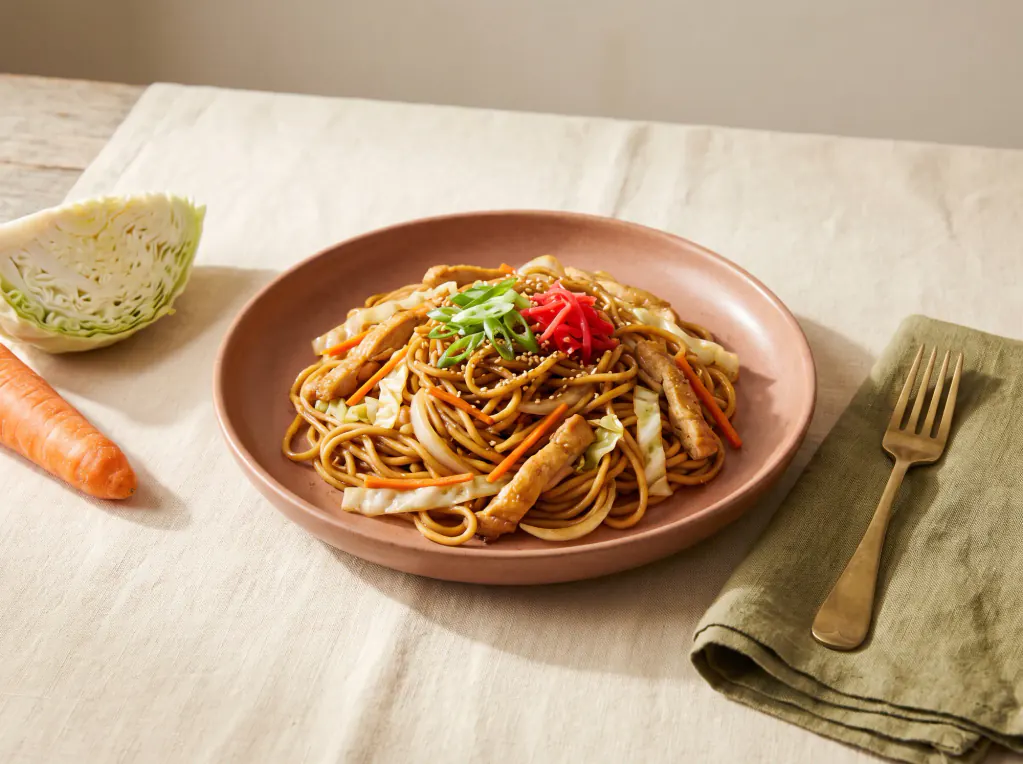
Kimchi Fried Rice
Kimchi bokkeumbap is Korean home cooking at its most resourceful, and it’s best when your kimchi is well fermented and properly sour. We render strips of pork belly, fry the kimchi in that fat until it just starts to caramelise, then add day-old rice. A runny fried egg on top is non-negotiable: the yolk becomes a second sauce.

- Prep
- 10 min
- Cook
- 15 min
- Total
- 25 min
- Servings
- 2
- Level
- Easy
- Per serving
- 780 kcal
Ingredients
-
What to use instead
Kimchi is sold in supermarkets and Asian shops. Sauerkraut is no substitute — it lacks the heat and the garlic-ginger depth.
-
What to use instead
Bacon, ham or canned luncheon meat, popular in Korea, all work instead of pork belly. For a vegetarian version, use tofu and vegan kimchi made without fish sauce.
Makes: 2 servings
Shopping list
The ingredients for the servings you chose — copy them or send them to a messenger. Tick what you already have at home: only the rest goes on the list.
Method
-
Step 1: Prep everything
Snip the kimchi into 1–2 cm pieces with scissors. Cut the pork belly into 1 cm strips. Slice the green onions, keeping whites and greens separate. Cut the nori into thin strips with scissors.
-
Step 2: Render the pork
Put the pork belly in a pan with 1 tsp of the oil and fry over medium heat for 5–6 minutes until golden at the edges and the fat has rendered. It must be cooked through with no pink.
-
Step 3: Fry the kimchi
Add the onion whites and kimchi and fry for 3–4 minutes until the kimchi softens and starts to caramelise. Stir in the gochujang, kimchi juice and sugar.
-
Step 4: Add the rice
Break up the cold rice with your hands and add it to the pan. Toss over high heat for 3–4 minutes until evenly coloured and hot through.
-
Step 5: Get a crust
Press the rice into an even layer and leave it for 1–2 minutes so a crisp crust forms underneath. Season with soy sauce and sesame oil, toss and divide between bowls.
-
Step 6: Fry the eggs
In a clean pan with the rest of the oil, fry the eggs over medium-high heat until the edges are lacy and crisp but the yolks still runny.
-
Step 7: Serve
Top the rice with the eggs and sprinkle with nori, sesame seeds and the green onion tops. Break the yolk and mix it through as you eat.
Tips & variations
-
Tip
Fresh kimchi tastes flatter. If yours is young, leave the opened jar at room temperature for a day, then return it to the fridge — it will sour nicely.
-
Swap
Bacon, ham or canned luncheon meat, popular in Korea, all work instead of pork belly. For a vegetarian version, use tofu and vegan kimchi made without fish sauce.
-
Swap
Kimchi is sold in supermarkets and Asian shops. Sauerkraut is no substitute — it lacks the heat and the garlic-ginger depth.
-
Storage
The rice keeps in the fridge for 2 days without the egg. Reheat in a pan and fry a fresh egg.
Nutrition
| 1 serving | Whole dish 2 servings | |
|---|---|---|
| Energy | 780 kcal | 1,560 kcal |
| Protein | 24 g | 48 g |
| Fat | 46 g | 92 g |
| Carbohydrates | 68 g | 136 g |
Approximate values calculated from standard ingredient data.
Cooked it? Rate the recipe
No ratings yet — yours will be the first.