

No-Knead Dutch Oven Bread
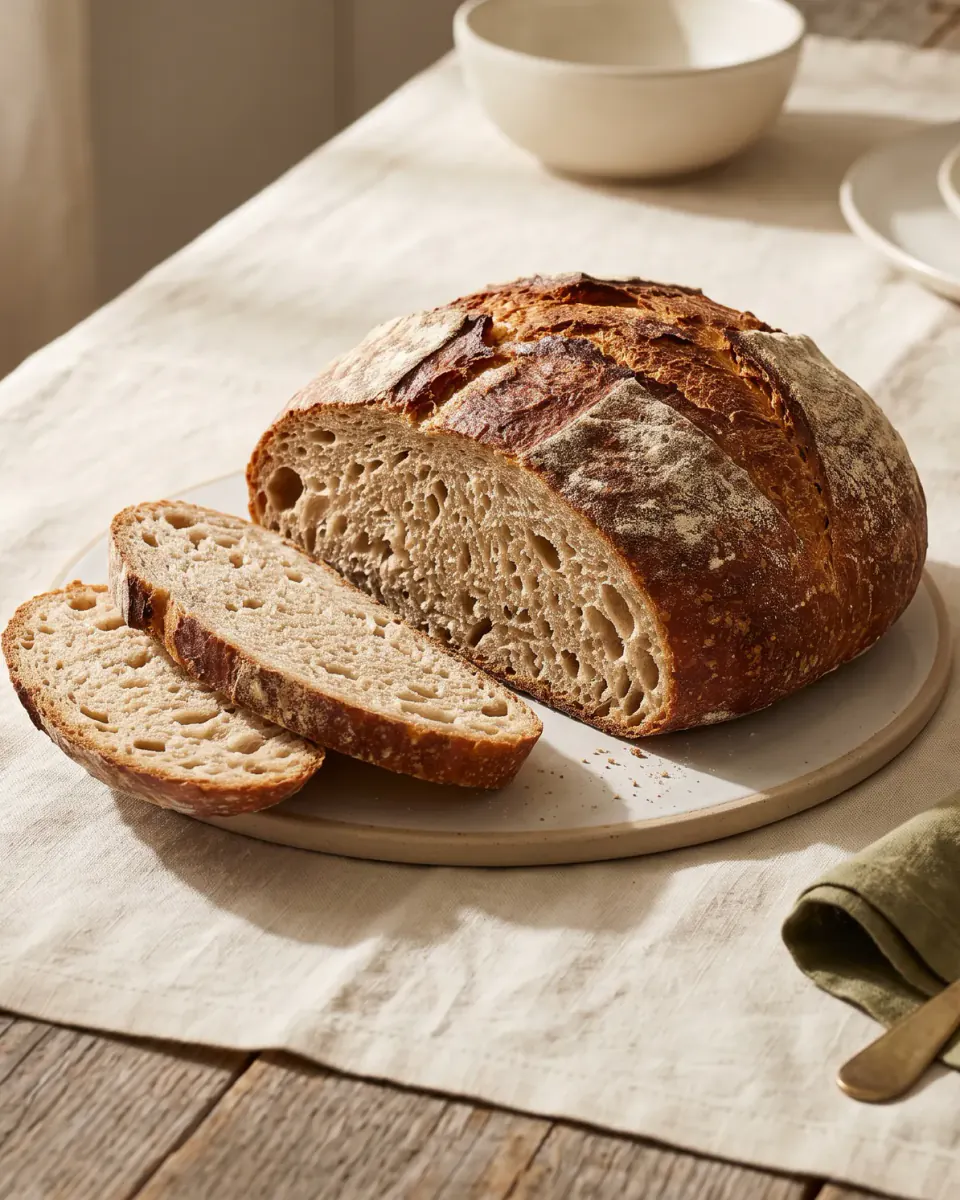
This is the loaf for anyone convinced that bread is difficult. You stir four ingredients together with a spoon and let time do the rest: overnight, the gluten develops on its own without any kneading. A blazing-hot cast-iron pot works like a mini bread oven and gives you a crust that crackles under the knife.
- Prep
- 15 min
- Cook
- 50 min
- Rest
- 16 h 30 min
- Total
- 17 h 35 min
- Servings
- 10
- Level
- Easy
- Per serving
- 165 kcal
Ingredients
Makes: 1 round loaf, about 800 g, 10 slices
Shopping list
The ingredients for the servings you chose — copy them or send them to a messenger. Tick what you already have at home: only the rest goes on the list.
Method
Oven
250 °C · top and bottom heat, no fan
With a fan: 230 °C
-
Step 1: Stir together
In a large bowl, combine the flour, salt and yeast, pour in the water and stir with a spoon for about a minute, until no dry flour remains. The dough will be shaggy and sticky.
-
Step 2: Let time work
Cover the bowl and leave at room temperature (20–22 °C) for 12–18 hours. It’s ready when it has more than doubled, the surface is dotted with bubbles and the dough is puffy and stringy.
-
Step 3: Shape a round
Flour the counter generously and ease the dough out onto it. Fold the edges into the centre four times to make a round cushion, then flip it seam-side down onto a floured sheet of parchment.
-
Step 4: Second rise
Cover with a towel and leave for 1–2 hours, until visibly puffier. After the first hour, put a lidded cast-iron pot into the cold oven and heat it to 250 °C (480 °F) for at least 30 minutes.
-
Step 5: Bake covered
Carefully take out the hot pot, lower the dough in on its parchment, score it if you like and put the lid on. Reduce the oven to 240 °C (465 °F) and bake for 30 minutes.
-
Step 6: Bake uncovered
Remove the lid and bake for another 15–20 minutes, until the crust is a deep chestnut brown and the loaf sounds hollow when tapped underneath.
-
Step 7: Cool
Move the bread to a rack and let it cool for at least an hour before slicing.
Tips & variations
-
Tip
The pot has to be scorching: the blast of heat from below and the trapped steam give the loaf its rise and crackly crust. Use thick oven gloves.
-
Variation
Replace 100 g of the flour with rye or whole wheat and add 20 ml more water for a deeper flavour.
-
Tip
In a cool kitchen (below 20 °C) the dough may need up to 20 hours. Trust the bubbles, not the clock.
-
Storage
Store cut-side down on a board for up to 3 days. From day two it’s at its best toasted.
Nutrition
| 1 serving | Whole dish 10 servings | |
|---|---|---|
| Energy | 165 kcal | 1,650 kcal |
| Protein | 5 g | 50 g |
| Fat | 1 g | 5 g |
| Carbohydrates | 34 g | 340 g |
Approximate values calculated from standard ingredient data.
Cooked it? Rate the recipe
No ratings yet — yours will be the first.


