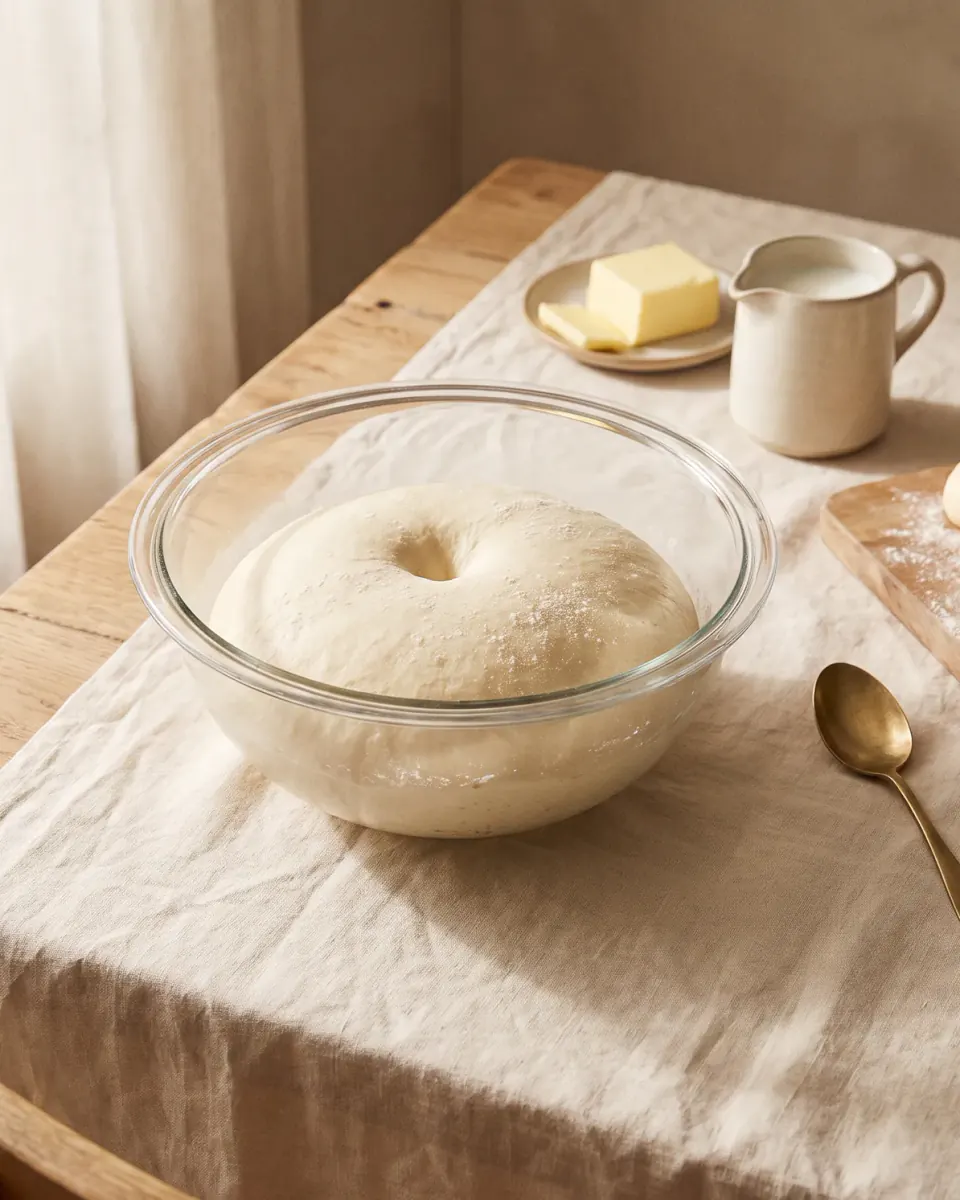
Homemade Filo Dough
Filo is dough pushed to its limit: four hundred grams of flour become a dozen sheets as thin as paper. To roll that far the gluten has to be both strong and relaxed, hence the long knead, the spoonful of vinegar and the hour of rest. The sheets are dusted with cornflour, not flour: flour soaks in and glues the layers together.
- Prep
- 1 h 30 min
- Rest
- 1 h
- Total
- 2 h 30 min
- Servings
- 12
- Level
- Challenging
- Per serving
- 165 kcal
Ingredients
Makes: 12 sheets, roughly 30×40 cm
Shopping list
The ingredients for the servings you chose — copy them or send them to a messenger. Tick what you already have at home: only the rest goes on the list.
Method
-
Step 1: Knead a firm dough
Combine the flour, salt, warm water, oil and vinegar and knead for 10 minutes. Hydration is only 55%, so the dough is stiff — as it should be, since a slack one simply tears.
-
Step 2: Test the spring
Press a finger into it: the dent should fill back slowly. If a piece tears when you stretch it, knead for another 3 minutes.
-
Step 3: Rest for an hour
Wrap the dough and leave it at room temperature for an hour. The gluten relaxes; without that it pulls back after every pass of the pin.
-
Step 4: Divide into 12 balls
Cut pieces of about 55 g, roll them into balls and keep them covered. Filo that has dried out cannot be rescued.
-
Step 5: Roll them out roughly
Roll each ball to a 15 cm disc, dusting with cornflour, then let them sit another 10 minutes so the dough becomes more willing.
-
Step 6: Roll until translucent
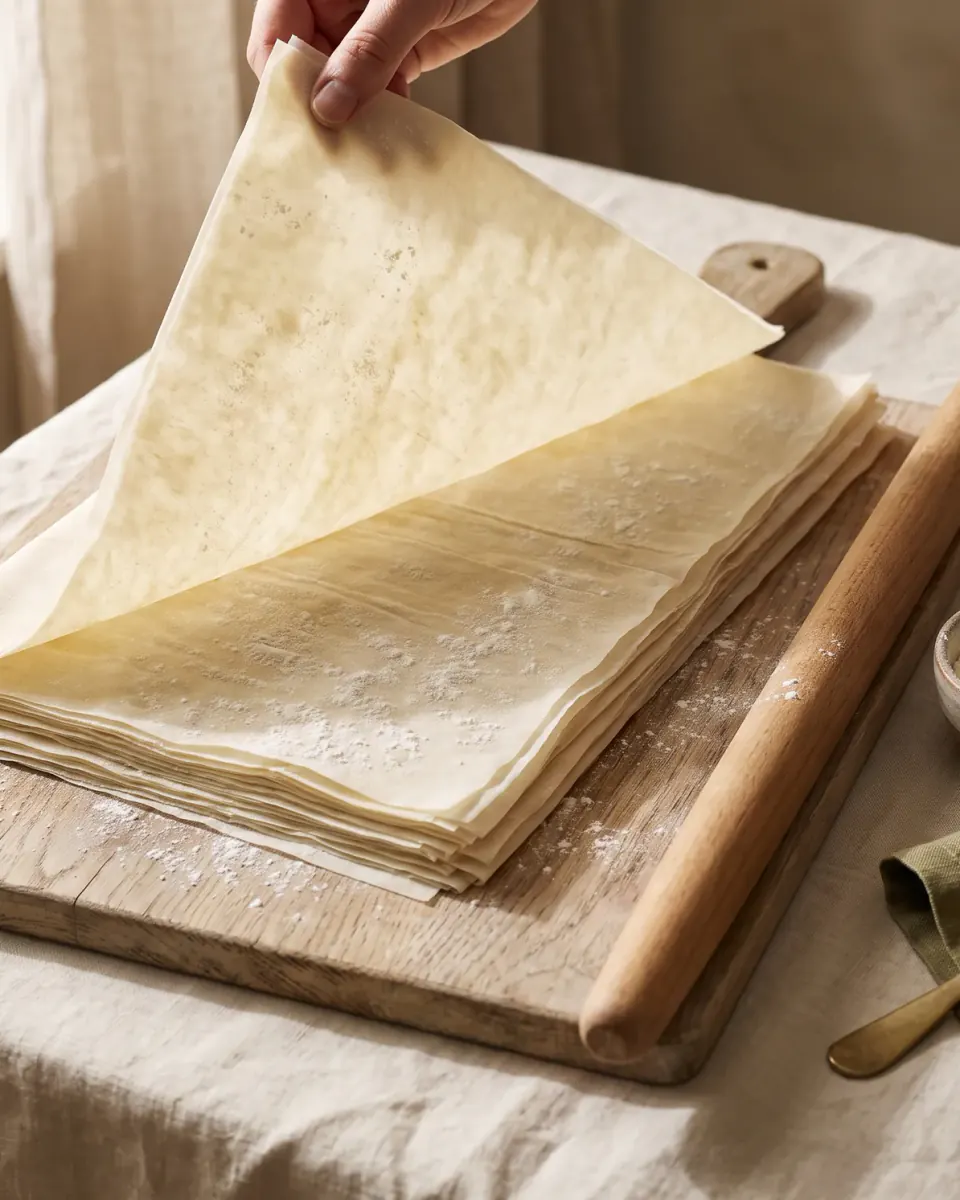
With a thin long pin, roll from the centre outwards, turning the sheet 90° each time and dusting with cornflour. The benchmark is simple: you should see the grain of the board through the sheet.
-
Step 7: Stack with starch
Dust each finished sheet with cornflour and keep the stack under a damp cloth. Starch does not absorb into the dough, so the sheets separate later; flour would weld them together.
-
Step 8: Use it straight away
Brush every sheet with oil or butter as you assemble. Exposed to air, filo dries and starts to crack within two minutes, so keep the rest of the stack covered.
Tips & variations
-
Tip
Use flour with at least 12 g of protein per 100 g. On weak flour the sheet tears before it ever becomes translucent.
-
Tip
A hole is not a disaster. Patch it with an offcut brushed with oil; in the finished dish you will never find the repair.
-
Variation
Rolled slightly thicker, the same sheets make fresh lasagne: boil them for 2 minutes in salted water before layering.
-
Storage
Interleaved with baking paper and tightly wrapped, the stack keeps 3 days in the fridge and a month in the freezer. Defrost in the fridge, or condensation will glue the sheets together.
Nutrition
| 1 serving | Whole dish 12 servings | |
|---|---|---|
| Energy | 165 kcal | 1,980 kcal |
| Protein | 4 g | 48 g |
| Fat | 4 g | 48 g |
| Carbohydrates | 28 g | 336 g |
Approximate values calculated from standard ingredient data.
Cooked it? Rate the recipe
No ratings yet — yours will be the first.