Sauerkraut
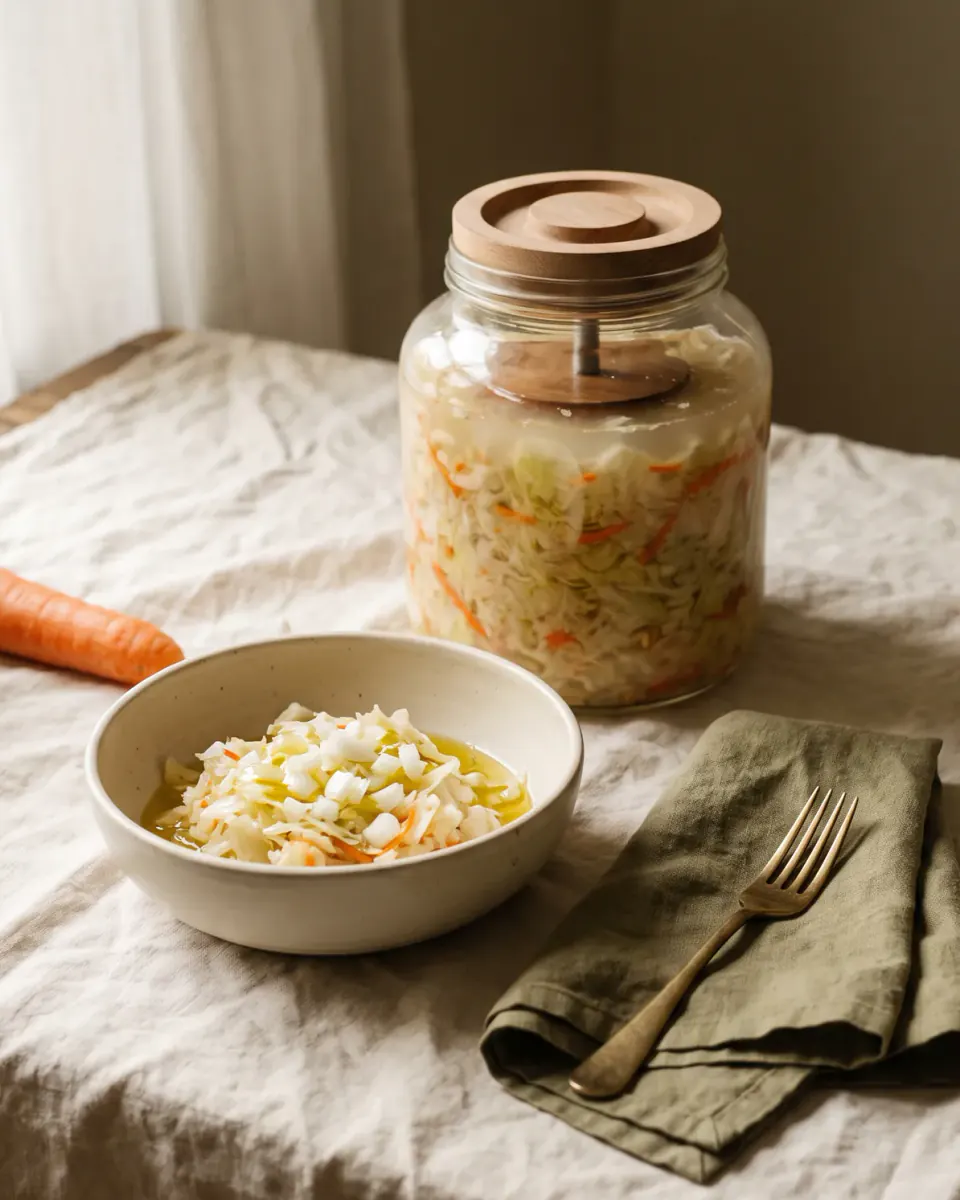
Sauerkraut is not a pickle but a live ferment: salt draws out the juice and lactic bacteria do the rest. That is why there is no vinegar here and never should be. Three days in a warm kitchen and it is ready; after that it has to go somewhere cold or it keeps going and turns sharp.
- Prep
- 30 min
- Rest
- 72 h
- Total
- 72 h 30 min
- Servings
- 20
- Level
- Easy
- Per serving
- 25 kcal
Ingredients
Makes: one 3 l jar
Shopping list
The ingredients for the servings you chose — copy them or send them to a messenger. Tick what you already have at home: only the rest goes on the list.
Method
-
Step 1: Shred the cabbage
Remove the outer leaves, quarter the head and shred it 3–4 mm thick. Shredded too finely, it goes mushy.
-
Step 2: Add carrot and salt
Grate the carrots coarsely. Mix with the cabbage, add salt at 20 g per kilo of vegetables, and the dill seeds.
-
Step 3: Work it by hand
Squeeze and rub the cabbage for 5–7 minutes until it turns wet and starts releasing juice. It is hard to overdo and easy to under-do.
-
Step 4: Pack the jar
Press the cabbage into the jar in layers with the bay leaves, pushing down with your fist. The juice should rise and cover it.
-
Step 5: Weigh it down
Press it with a glass of water or a clean stone. Stand the jar in a bowl — the juice rises during fermentation and runs over.
-
Step 6: Ferment for three days
Leave at room temperature for 3 days. Twice a day pierce right to the bottom with a long wooden stick to let the gas out.
-
Step 7: Move it to the cold
When the foam stops and the taste is pleasantly sour, close the jar and move it to the fridge or cellar.
Tips & variations
-
Tip
Use a late, firm, pale head — early cabbage ferments soft and bland.
-
Tip
If you skip the piercing, trapped gas leaves a bitterness that never goes away. This is the usual reason a batch fails.
-
Variation
Lingonberries, cranberries or thin slices of tart apple go in as you pack the jar.
-
Storage
Two months in the fridge, all winter in a cellar. The cabbage must always stay under the brine.
Nutrition
| 1 serving | Whole dish 20 servings | |
|---|---|---|
| Energy | 25 kcal | 500 kcal |
| Protein | 1 g | 20 g |
| Fat | 0 g | 0 g |
| Carbohydrates | 4 g | 80 g |
Approximate values calculated from standard ingredient data.
Cooked it? Rate the recipe
No ratings yet — yours will be the first.