Enriched Yeast Dough
This is the everyday enriched dough: soft enough for filled buns, strong enough to hold a filling. Hydration sits around 60%, so it stays slightly tacky, which is exactly why it bakes up light. Two things decide the outcome — the temperature of the milk, and adding the butter only after the gluten has formed.
- Prep
- 30 min
- Rest
- 2 h 5 min
- Total
- 2 h 35 min
- Servings
- 16
- Level
- Medium
- Per serving
- 165 kcal
Ingredients
-
What to use instead
Fresh compressed yeast replaces dried at three times the weight: 21 g instead of 7 g, dissolved in the warm milk the same way.
Makes: dough for 16 buns, about 900 g
Shopping list
The ingredients for the servings you chose — copy them or send them to a messenger. Tick what you already have at home: only the rest goes on the list.
Method
-
Step 1: Wake the yeast
Dissolve the yeast and a spoonful of the sugar in milk at 35–38 °C and leave for 10 minutes until a foamy cap forms. The milk should feel barely warm on your wrist; above 45 °C the yeast dies.
-
Step 2: Combine the dry side
Mix the flour with the remaining sugar and the salt. Never tip salt straight onto yeast — it draws water out of the cells and stalls them.
-
Step 3: Bring it together
Pour the milk mixture and the egg into the flour, stir to a shaggy mass and leave it for 5 minutes. The flour hydrates on its own and you will need less kneading.
-
Step 4: Knead for 10 minutes
Knead until the dough is smooth and stops clinging to the sides of the bowl. Resist adding flour: the stickiness disappears by itself.
-
Step 5: Work in the butter
Add the softened butter in three additions. The dough will come apart and look ruined — keep going for another 5 minutes until it regroups and passes the windowpane test: a piece stretches thin enough to see light through without tearing.
-
Step 6: First rise
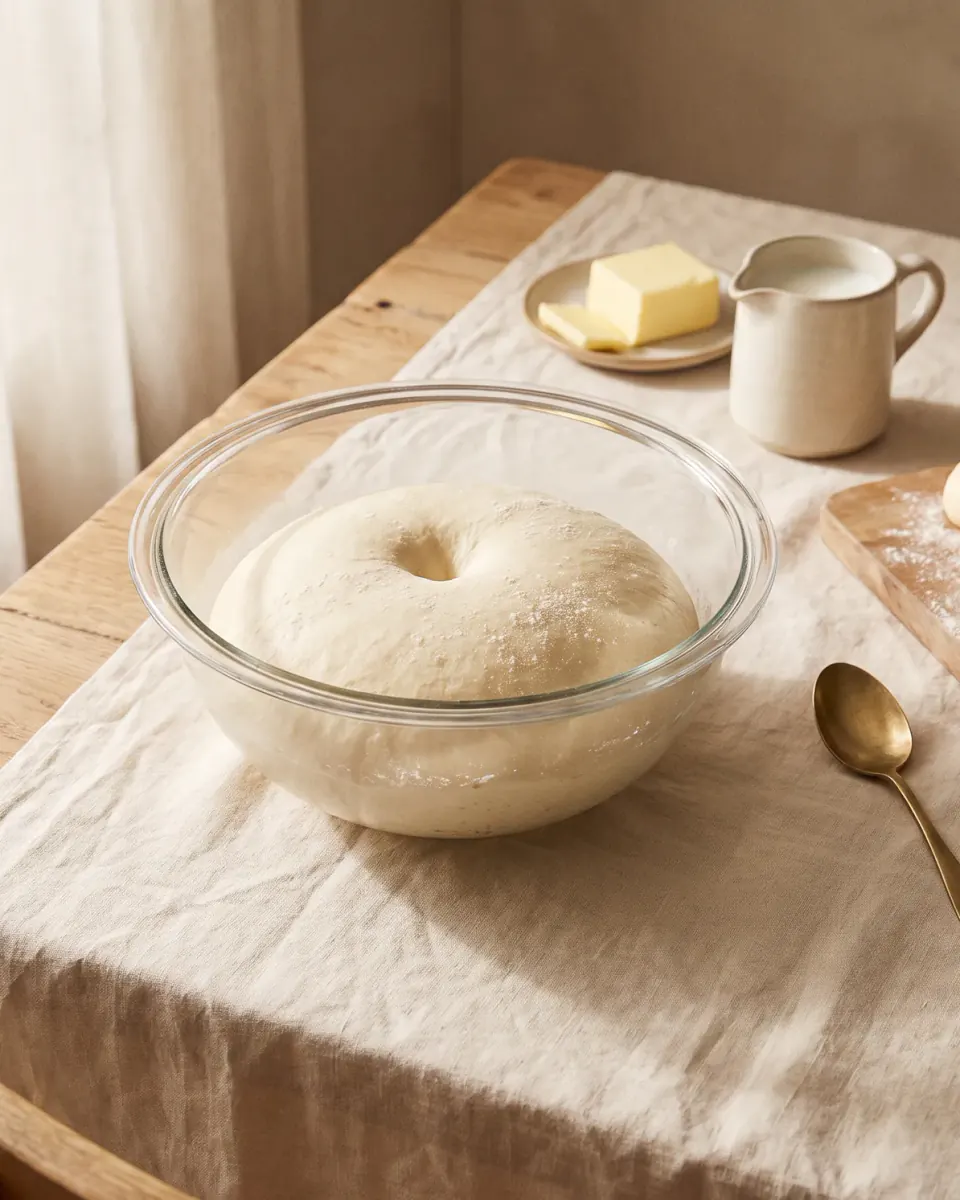
Cover and leave at 24–26 °C for 60–90 minutes, until doubled in volume.
-
Step 7: Use the poke test
Dip a finger in flour and press 1 cm into the dough. A dent that fills slowly and only part way means ready; one that springs straight back means not yet; one that stays put, with a sharp alcohol smell, means over-proofed.
-
Step 8: Shape and prove again
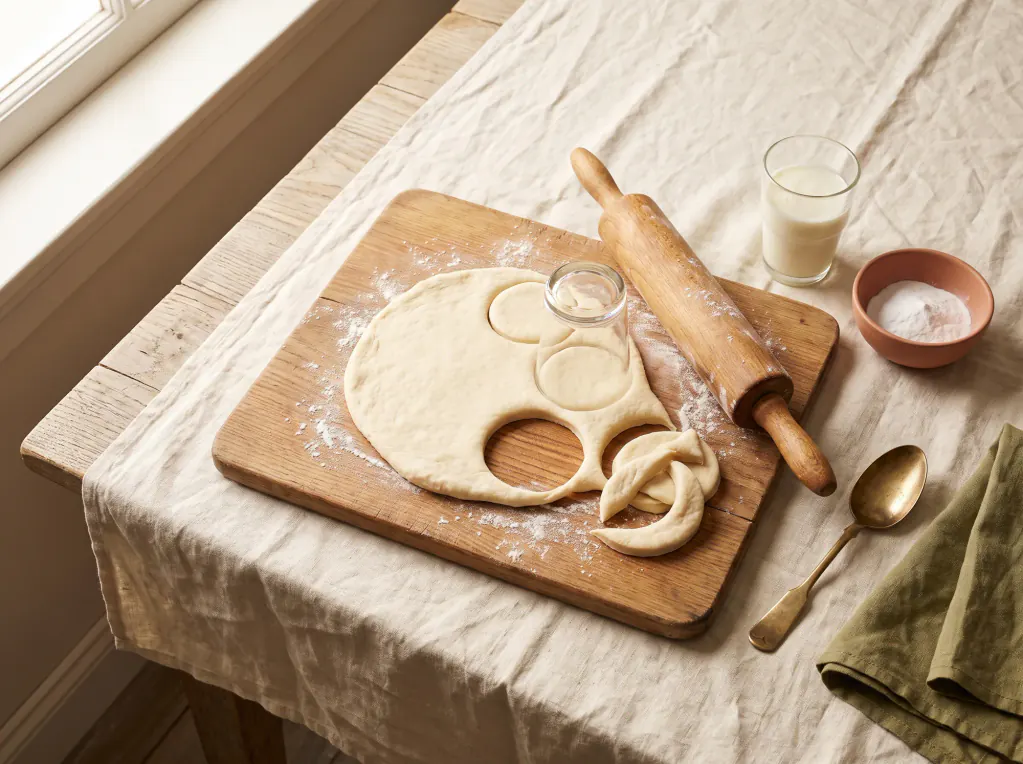
Deflate the dough gently, divide it into 16 pieces of about 55 g, shape and leave under a cloth for 30–35 minutes. This time a dent that half recovers is enough — then bake at 180 °C.
Tips & variations
-
Tip
Judge by appearance, not by minutes: 60 minutes in a warm kitchen and 3 hours in a cold one give the same dough.
-
Tip
If your kitchen is at 18 °C, put the bowl in the oven with only the light on — that holds a steady 25–27 °C with no heat at all.
-
Swap
Fresh compressed yeast replaces dried at three times the weight: 21 g instead of 7 g, dissolved in the warm milk the same way.
-
Storage
After the first rise the dough can go into the fridge overnight; the slow ferment deepens the flavour. Give it an hour to warm up in the morning.
Nutrition
| 1 serving | Whole dish 16 servings | |
|---|---|---|
| Energy | 165 kcal | 2,640 kcal |
| Protein | 5 g | 80 g |
| Fat | 5 g | 80 g |
| Carbohydrates | 24 g | 384 g |
Approximate values calculated from standard ingredient data.
Cooked it? Rate the recipe
No ratings yet — yours will be the first.